
Views: 165 Author: Site Editor Publish Time: 2026-08-12 Origin: Site


Transporting volatile liquids demands zero margin for error. The structural integrity of a hazardous materials transport vehicle relies entirely on the molecular strength of its seams. Fleet managers and logistics directors must evaluate the structural reliability of an Aluminum Fuel Tanker Trailer before procurement to prevent catastrophic leaks, environmental fines, and operational downtime. A single microscopic flaw in a tank seam can compromise the entire payload under dynamic road stress. Understanding the exact engineering methodologies manufacturers use to verify weld quality separates a compliant, high-performing asset from a high-risk liability. Buyers need to know exactly which non-destructive testing reports to demand and how to read them. This guide breaks down the technical verification processes, from pre-weld material preparation to final hydrostatic testing, ensuring your next fleet addition meets the highest safety standards.
Non-Destructive Testing (NDT) is Non-Negotiable: Radiographic (X-ray) and Ultrasonic testing are the industry standards for proving internal weld integrity without damaging the tank.
Compliance Dictates Quality: Verified tanks must meet strict regulatory frameworks (e.g., DOT 406, ADR, ASME Section VIII) backed by documented material test reports.
Automation vs. Manual Expertise: The integration of robotic TIG/MIG welding reduces human error, but certified manual oversight remains critical for complex joint geometries.
Documentation is Proof: Buyers must mandate comprehensive weld maps, Welder Performance Qualification records, and NDT inspection reports as a condition of purchase.
Defining what constitutes a perfect weld in the context of hazardous liquid transport requires understanding the dynamic road stresses these vessels endure. A single microscopic flaw can compromise the entire structure under load. When a fully loaded trailer navigates uneven terrain, takes sharp turns, or brakes suddenly, the liquid payload creates massive kinetic energy. This sloshing effect transfers immense stress directly to the bulkheads and longitudinal seams.
Aluminum possesses high thermal conductivity and a low melting point compared to carbon or stainless steel. The persistent alumina oxide surface layer has a melting point of approximately 2,060°C, whereas the underlying aluminum melts at 660°C. This massive temperature differential requires precise cleaning to prevent inclusion defects. If the oxide layer gets trapped in the weld pool, it creates hard, brittle spots that act as stress concentrators.
There is an extreme risk of hydrogen-induced porosity, oxide layer contamination, and micro-cracking in the heat-affected zone (HAZ). Hydrogen is highly soluble in molten aluminum but practically insoluble in solid aluminum. If moisture or hydrocarbons contaminate the weld zone, the hydrogen gas gets trapped as the metal solidifies, leaving microscopic voids. Road vibration, chassis torsion, and liquid surge within a large capacity aluminum tanker test the fatigue resistance of every seam daily.
Material Property | Aluminum (5000 Series) | Carbon Steel | Welding Impact |
|---|---|---|---|
Thermal Conductivity | High | Low | Requires higher heat input initially, risking burn-through. |
Oxide Melting Point | 2,060°C | Similar to base metal | Mandates aggressive pre-weld mechanical and chemical cleaning. |
Hydrogen Solubility | High in liquid state | Low | Extreme susceptibility to porosity from moisture or grease. |
Weld failures lead to severe safety and environmental risks, including spill liabilities, hazmat cleanup costs, and potential ignition events. A hairline fracture in a bottom-loading manifold seam can leak hundreds of gallons of fuel before detection. Operational downtime creates a compounding financial impact when pulling a high-capacity asset off the road for emergency structural patching. Furthermore, regulatory penalties include fines and fleet grounding associated with failing roadside DOT/ADR inspections. The cost of a single hazmat spill dwarfs the initial purchase price of the trailer.
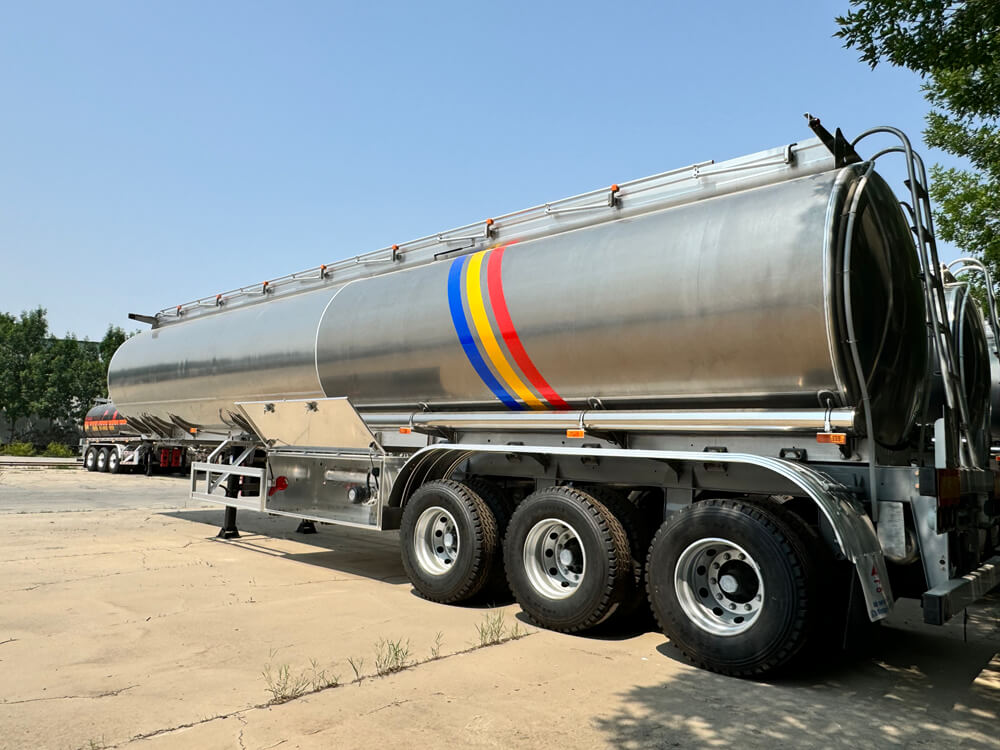
Verification begins long before the arc is struck. Proper preparation is the foundation of weld quality. You cannot inspect quality into a bad weld; you must build it in from the material selection phase.
Manufacturers must verify parent metals, typically 5454-H32 for heat resistance or 5083-H111 for high strength, and their corresponding filler wires, like 5356 or 5554. This ensures electrochemical and mechanical compatibility. Using the wrong filler wire leads to galvanic corrosion or immediate hot cracking during solidification. Material Test Reports (MTRs) validate the chemical composition and tensile strength of both plates and filler metals prior to fabrication. Inspectors check these MTRs against the heat numbers stamped on the raw aluminum sheets.
Mechanical cleaning and chemical degreasing processes are necessary to eliminate hydrocarbons and moisture. Manufacturers must maintain dedicated, draft-free, climate-controlled aluminum welding bays to prevent moisture condensation and cross-contamination from carbon steel particulate. Shielding gas delivery systems, typically 100% Argon or Argon-Helium mixtures, require verification using dew-point meters to ensure zero gas-line moisture contamination.
The standard pre-weld preparation sequence includes:
Solvent degreasing to remove mill scale, cutting fluids, and handling oils.
Mechanical brushing using dedicated stainless steel wire brushes (never used on carbon steel).
Edge profiling and beveling to ensure complete joint penetration.
Immediate welding within a specified time window (usually under 8 hours) before the oxide layer reforms to a problematic thickness.
Specific engineering protocols validate seam integrity before the aluminum fuel tank trailer leaves the manufacturing floor. These tests are categorized into visual, non-destructive, and pressure-based evaluations.
Inspection under high-intensity lighting identifies surface defects like undercut, overlap, crater cracks, and excessive or insufficient reinforcement according to AWS D1.2 standards. Inspectors utilize weld gauges to measure fillet weld throat thickness, leg length, and reinforcement height. A trained inspector can spot cold lap or improper tie-ins just by examining the ripple pattern of the weld bead.
Radiographic Testing (RT) utilizes X-rays to generate internal structural profiles of longitudinal and circumferential seams, detecting internal voids, porosity, and incomplete penetration. RT provides a permanent film or digital record of the weld's internal structure. Ultrasonic Testing (UT) and Phased Array UT (PAUT) deploy high-frequency sound waves to measure wall thickness, locate deep sub-surface flaws, and map weld root fusion with high spatial resolution. Dye Penetrant Inspection (DPI) applies visible or fluorescent liquid dyes to expose surface-breaking micro-cracks and pinholes that are invisible to the naked eye.
Hydrostatic testing involves filling the aluminum petrol tanker trailer with water and pressurizing it beyond normal operating limits to verify structural yield strength, bulkhead integrity, and leak resistance. Water is used because it is incompressible, making the test safer than using compressed gas. Pneumatic testing uses pressurized air combined with a leak-detection soap solution applied to all welded seams to detect micro-leaks under operational stress conditions.
Sample weld coupons, created under the exact run-off conditions as the tank, undergo mechanical tension and bending stresses until failure to verify the baseline strength of the welding procedure. Macroscopic examination involves cross-sectioning, polishing, and acid-etching sample welds to evaluate penetration depth, fusion profiles, and heat-affected zone grain structure. This proves the welding parameters are sound before production begins.
Assessing a manufacturer's internal quality management systems and adherence to global standards ensures the final product can legally and safely operate on public roads.
Tanks must meet regulatory frameworks under DOT 406 (US), ADR (Europe), and TC 406 (Canada) for hazardous materials transport. These codes dictate minimum wall thicknesses, baffle placement, and weld reinforcement limits. Adherence to ASME Boiler and Pressure Vessel Code (Section VIII, Division 1) and ISO 3834 for weld design, execution, and testing is mandatory for pressure-retaining vessels.
All processes must be backed by a formal Welding Procedure Specification (WPS) and its supporting Procedure Qualification Record (PQR). Manual welders must hold current, verified certifications under AWS D1.2 or EN ISO 9606-2. The integration of automated longitudinal and circumferential welding machines guarantees bead consistency, optimal heat input, and minimized Heat-Affected Zones. Certified Welding Inspectors (CWIs) and Authorized Inspectors (AI) provide necessary third-party oversight during key stages of fabrication, signing off on the traveler documents as each manufacturing milestone is reached.
Weld quality directly influences the conceptual trade-offs between upfront capital expenditure and long-term asset performance. A cheaper trailer with substandard welds will quickly consume any initial savings through maintenance downtime.
Verified, defect-free welds prevent the propagation of fatigue cracks over a 15-to-20-year operational lifespan under dynamic road stresses. This maintains the lightweight advantages of aluminum without compromising the structural payload capacity of the aluminum semi trailer fuel tank. Controlled welding heat inputs preserve the original tempered strength of the aluminum alloy, avoiding premature structural softening near the weld. When the HAZ is kept narrow, the tank retains its rigidity and resists bulging under liquid surge.
The premium paid for rigorously tested tanks offsets the exponential costs of recurring weld repairs, out-of-service time, and shortened asset lifecycles. Documented manufacturing quality and clean inspection histories maintain high residual value in the secondary market. Used equipment buyers actively look for original factory NDT reports and clean DOT inspection records before making an offer.
Procurement teams must take actionable steps to verify claims and protect their investment. Trusting a sales brochure is not enough when dealing with hazardous materials.
Visual indicators of poor quality include inconsistent weld bead profiles, excessive spatter, undercut, surface porosity, or arc strikes on the base metal. Arc strikes outside the weld zone create micro-fissures that can propagate into major cracks. Facility deficiencies, such as a lack of dedicated, clean aluminum fabrication zones, poor plate storage practices, or uncertified NDT technicians, are major warning signs. If you see carbon steel grinding happening next to open aluminum welding bays, walk away.
Buyers should request detailed schematics mapping every structural weld to the specific certified welder or robotic program that executed it. Certified, third-party Radiographic and Ultrasonic testing reports matching the specific serial number of the purchased tank are essential. Mill Test Certificates linking the chemical composition of the plates back to the aluminum producer provide further verification. Ensure all documents bear the stamp and signature of a certified inspector.
Weld quality dictates the safety, compliance, and longevity of an aluminum fuel transport asset. Buyers must immediately disqualify manufacturers who cannot provide transparent, documented proof of NDT, WPS/PQR, and pressure testing protocols.
Request sample NDT reports from prospective manufacturers to verify their documentation standards.
Verify their DOT/ADR compliance certifications through independent regulatory databases.
Schedule a physical facility audit to observe their aluminum welding environment and preparation procedures firsthand.
Mandate that all final inspection reports match the specific serial numbers of your procured units.
A: Visual inspections should occur daily pre-trip. External visual and leakproofness tests must be conducted annually, and internal structural/thickness inspections are mandated every 5 years under DOT 406/EPA Method 27 regulations.
A: A combination of automated Gas Metal Arc Welding (GMAW/MIG) for structural longitudinal seams provides high deposition rates and consistent penetration, while manual Gas Tungsten Arc Welding (GTAW/TIG) is often used for complex fittings and repairs.
A: While Phased Array Ultrasonic Testing offers excellent flaw detection and depth sizing without radiation hazards, Radiographic Testing remains the definitive standard for detecting volumetric defects like porosity in aluminum welds.
A: Welding heat alters the temper of the aluminum alloy, reducing its mechanical strength in the HAZ. Proper heat input control and alloy selection are necessary to minimize this weakening effect.
A: Essential documentation includes Welding Procedure Specifications (WPS), Procedure Qualification Records (PQR), Welder Performance Qualifications (WPQ), Material Test Reports (MTRs), and certified Non-Destructive Testing (NDT) reports.


