
Views: 148 Author: Site Editor Publish Time: 2026-08-20 Origin: Site


Thermal inefficiency directly correlates with revenue loss in cryogenic transport. Even a fractional increase in heat leak accelerates Boil-Off Gas (BOG) generation, turning valuable payload into vented waste. Fleet operators and procurement engineers face a constant challenge when verifying manufacturer claims regarding insulation performance. Degraded vacuum systems, poor thermal design, or failing barrier materials severely compromise payload retention and operational safety. You need reliable data to make informed fleet decisions.
Industry-standard heat leak measurement protocols provide the objective data required for evaluating and shortlisting high-performance transport assets. Static Evaporation Rate (SER) testing, dynamic performance modeling, and vacuum retention analysis offer a clear window into the thermal health of a vessel. Understanding these metrics allows operators to distinguish between superior engineering and substandard manufacturing, ensuring long-term profitability and safety on the road.
Heat leak in a cryogenic LNG tanker trailer is primarily quantified through the Static Evaporation Rate (SER) test, measuring the volume of gas vaporized over a specific timeframe under controlled conditions.
Vacuum integrity is the primary defense against convective heat transfer; continuous monitoring of annular vacuum levels and the use of chemical getters are critical for long-term asset viability.
Evaluating thermal performance requires distinguishing between cryogenic requirements and standard pressurized transport (e.g., comparing a high-vacuum LNG tank trailer to a non-insulated LPG tank trailer).
Procurement decisions must weigh the initial capital expenditure of Multi-Layer Super Insulation (MLSI) against the lifecycle savings of reduced BOG, minimized venting, and maximized payload delivery.
Boil-Off Gas (BOG) represents the physical manifestation of heat ingress in cryogenic environments. Liquefied Natural Gas must remain at or below -162°C to maintain its liquid state. When external thermal energy penetrates the containment system, it transfers to the liquid payload. The thermodynamic behavior of LNG dictates that this absorbed heat provides the latent heat of vaporization necessary for a phase change. The liquid boils, converting into gas and expanding rapidly within the confined space of the inner vessel. This expansion is not a gradual process; it scales aggressively with even minor thermal breaches.
The financial impact of BOG generation is substantial and immediate. Every kilogram of vaporized liquid represents direct product loss that cannot be recovered during transit. Furthermore, as gas accumulates, internal tank pressure rises steadily. During long-haul transport or extended dwell times at terminals, this pressure can exceed the maximum allowable working limits of the relief valves. This necessitates controlled venting into the atmosphere to prevent catastrophic vessel failure. Venting wastes product and introduces severe environmental and safety concerns. Modern fleet operations establish strict baseline success criteria for thermal performance, demanding minimal daily evaporation rates to ensure maximum payload delivery and zero-venting transit windows.
Heat enters a cryogenic LNG tanker trailer through three primary mechanisms. Conduction occurs through physical connections between the ambient environment and the cryogenic inner vessel. Structural supports, inner-to-outer vessel piping, support rods, and internal baffles act as thermal bridges. Engineers combat this by utilizing materials with exceptionally low thermal conductivity. For example, Glass-Fiber Reinforced Polymer (GFRP) support structures offer significantly lower thermal conduction compared to traditional stainless steel supports. Replacing metal neck tubes with composite alternatives drastically reduces the conductive heat path.
Convection involves the transfer of heat through a fluid medium, such as air or gas. Cryogenic vessels eliminate gas-phase convective heat transfer by establishing a high vacuum in the annular space between the inner and outer tanks. Maintaining this vacuum below 1 x 10^-4 Torr ensures that virtually no gas molecules exist to carry heat across the gap. If the vacuum degrades, convective heat transfer spikes exponentially. Radiation, the transfer of heat via electromagnetic waves, is mitigated using reflective barriers. Multi-layer insulation (MLSI), consisting of alternating layers of double-aluminized Mylar and polyester spacer material, effectively reflects radiant heat away from the inner vessel. The number of layers and the wrapping tension directly dictate the effectiveness of this radiant shield.
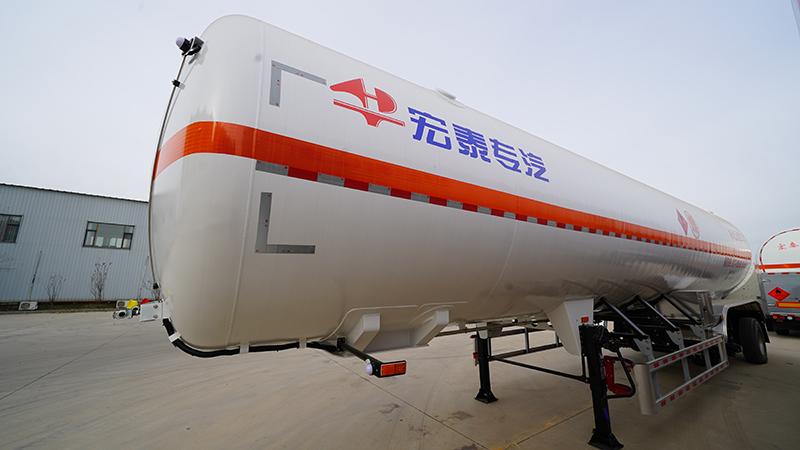
The Static Evaporation Rate (SER) test serves as the industry-standard benchmark for verifying heat leak during manufacturing and commissioning. Governed by stringent standards like CGA 341 and EN 13530, the SER test provides a controlled, repeatable measurement of a vessel's thermal efficiency. The methodology requires strict adherence to environmental controls to ensure data accuracy. Liquid nitrogen (LN2) is typically used due to its safety profile and standardized temperature delta, providing a consistent baseline for comparison across different manufacturing batches.
Executing a proper SER test involves a specific sequence of operations to guarantee valid results:
Purge the inner vessel with dry nitrogen gas to remove ambient moisture and prevent ice formation.
Fill the inner vessel to the specified test capacity with liquid nitrogen.
Allow the system to undergo a pre-cooling phase for a minimum of 24 hours to reach complete thermal equilibrium.
Seal the vessel and route the vent stack through a calibrated precision thermal mass flow meter.
Record the mass loss or volumetric flow of vented gas continuously over a 24 to 48-hour period.
Adjust the raw data for ambient barometric pressure and temperature fluctuations recorded during the test window.
Calculate the daily evaporation rate as a percentage of the total tank capacity.
Engineers then convert this LN2 test data into equivalent LNG boil-off metrics using established thermodynamic conversion factors to predict real-world performance.
While SER provides a controlled baseline, the Dynamic Evaporation Rate (DER) represents the real-world operational metric. A stationary tank experiences vastly different thermal dynamics than a moving vehicle. Vehicle motion, acceleration, braking, and road vibration induce liquid sloshing within the tank. This sloshing breaks the thermal stratification layer that naturally forms in stationary cryogenic liquids, where warmer liquid sits at the top and colder liquid remains at the bottom.
Breaking this stratification layer increases the wetted surface area of the inner shell. It exposes subcooled liquid to the slightly warmer upper sections of the tank walls and the vapor space. This interaction accelerates heat transfer and subsequent BOG generation, often doubling the evaporation rate compared to static conditions. Manufacturers install internal baffles to mitigate sloshing-induced heat leak. These baffles restrict fluid movement, maintaining the stratification layer and minimizing the dynamic acceleration of evaporation. The design, placement, and thermal conductivity of these baffles are critical engineering variables.
Outside of factory conditions, operators rely on operational measurement techniques during routine maintenance to verify ongoing thermal integrity. Pressure Rise Testing, or the Closed-Tank Method, involves sealing the tank and measuring the rate of internal pressure increase over time. By calculating the change in pressure over time (dP/dt) against the known volume and liquid level, technicians can accurately estimate the rate of heat ingress without venting any gas. This test is frequently performed during scheduled terminal layovers.
Vacuum decay monitoring provides another critical diagnostic tool for fleet mechanics. Technicians use calibrated Pirani or thermocouple gauges to read the vacuum levels directly from the annular space via dedicated access valves. A degrading vacuum reading serves as a direct proxy for insulation health. If the vacuum softens from 10^-4 Torr to 10^-2 Torr, convective heat transfer increases massively. This signals a vulnerability in the thermal containment system, such as a micro-leak in the outer jacket or excessive outgassing, requiring immediate maintenance and vacuum pump-down.
Evaluating thermal performance requires understanding the distinct differences between cryogenic requirements and standard pressurized transport. The extreme thermal isolation required for a cryogenic vessel contrasts sharply with the pressure-containment focus of an LPG tank trailer. Heat leak measurement protocols for cryogenic applications are vastly more stringent because any heat ingress directly causes a phase change and permanent product loss.
Conversely, a standard LPG semi trailer operates at ambient temperatures. While heat ingress from the sun increases internal pressure, it does not cause the rapid, continuous phase change seen in LNG transport. Therefore, a non-insulated gas tank semi trailer configuration focuses entirely on high-pressure containment and structural yield strength rather than extreme thermal isolation. The testing protocols for these vessels prioritize hydrostatic pressure testing over evaporation rate monitoring.
Feature | Cryogenic LNG Tanker Trailer | LPG Tank Trailer / LPG Semi Trailer |
|---|---|---|
Operating Temp | -162°C | Ambient (e.g., -40 to 45°C) |
Insulation | High-vacuum + MLSI | None (or simple sunshield) |
Heat Leak Risk | Phase change (BOG) | Pressure build-up only |
Main Focus | Thermal isolation | High-pressure containment |
Multi-Layer Super Insulation (MLSI) offers exceptionally high thermal efficiency and a lower tare weight, maximizing payload capacity for fleet operators. However, MLSI requires a significantly deeper vacuum (below 10^-4 Torr) to remain effective. The manufacturing and repair processes for MLSI are complex, requiring specialized clean-room environments to prevent moisture contamination between the Mylar layers. Despite the manufacturing complexity, the operational outcomes heavily favor MLSI for long-haul transport due to superior payload retention and extended hold times.
Perlite vacuum insulation presents a lower initial capital requirement and features a robust, simple design. Perlite is a granular, siliceous material that fills the annular space, providing both insulation and structural support. However, perlite is highly susceptible to settling over time due to constant road vibrations and chassis flex. This settling creates thermal voids, or uninsulated hot spots, at the top of the tank, drastically increasing heat leak. Operators must weigh the lower initial investment of perlite against the long-term maintenance frequency, potential payload loss, and the heavy tare weight penalty.
Maintaining a deep vacuum over a 10 to 15-year asset lifecycle requires active preservation mechanisms. Manufacturers include chemical "getters," typically palladium-based compounds, molecular sieves, or metal oxide mixtures, placed strategically within the annular space. These getters perform a critical chemical function that mechanical vacuum pumps cannot replicate once the vessel is sealed.
Over time, the metal walls of the inner and outer vessels slowly outgas hydrogen, carbon monoxide, and trace moisture trapped within the steel matrix. Without intervention, these outgassed molecules would degrade the vacuum. Chemical getters actively absorb this outgassed hydrogen and moisture, binding them chemically at the molecular level. This continuous absorption preserves the deep vacuum necessary to prevent convective heat transfer, ensuring the vessel maintains its factory-rated SER for years.
Lifecycle profitability depends heavily on minimizing product loss during transit and layovers. You must analyze the trade-off between investing in premium insulation and the operational savings realized over time. A higher initial investment in an advanced LNG tank trailer equipped with MLSI yields significant returns through reduced product loss and less frequent tank venting. Every gallon of LNG saved from venting goes directly to the bottom line.
Calculating the long-term financial impact involves tracking manufacturer-stated evaporation rates against actual route durations and terminal wait times. A vessel that vents frequently due to poor thermal performance rapidly erodes profit margins. Furthermore, excessive venting triggers regulatory scrutiny and potential fines at loading terminals. Investing in superior thermal isolation ensures that the maximum volume of product reaches the final destination safely and profitably.
International standards, including ADR, DOT, and ASME Section XII, strictly govern the maximum allowable working pressure (MAWP) and venting thresholds for cryogenic transport. Verified heat leak measurements ensure compliance with these strict safety regulations. The hold-time—the duration a cryogenic vessel can remain under transport conditions without venting—is directly determined by the heat leak rate and the initial loading temperature.
Accurate SER data allows operators to calculate precise hold-times for various ambient conditions and payload densities. Exceeding these hold-times risks over-pressurization and emergency venting, which violates transport regulations and creates severe safety hazards on public roadways. Maintaining thermal integrity is not just an economic preference; it is a strict regulatory mandate enforced by transport authorities worldwide.
Extreme ambient temperatures, particularly during summer routing through desert climates, significantly impact the temperature differential (delta-T) between the cryogenic payload and the environment. A larger delta-T accelerates the rate of heat leak through the insulation barrier. Operators must account for these seasonal fluctuations when planning routes, calculating expected hold-times, and determining maximum fill levels.
Route topography and transit duration also heavily affect dynamic heat leak. Mountainous routes require frequent acceleration, heavy braking, and sharp cornering, increasing liquid sloshing and driving up the DER. Extended transit times naturally allow more total heat to penetrate the vessel, regardless of the insulation quality. Route planning software must incorporate these dynamic variables, adjusting expected pressure rise based on the specific terrain to ensure safe, vent-free delivery.
Road vibration, pothole impacts, and chassis flex exert continuous mechanical stress on the structural integrity of the inner vessel supports. Over thousands of miles, this repetitive stress can introduce micro-fissures in the GFRP neck tubes or cause structural alignment shifts. These shifts can compress the MLSI layers, creating new thermal bridges that bypass the insulation entirely.
Furthermore, mechanical stress risks creating micro-leaks in the outer jacket, especially at weld seams, piping penetrations, and valve manifolds. Even a microscopic breach allows ambient air to enter the annular space. This leads to rapid vacuum degradation, moisture freezing on the inner vessel, and a subsequent massive spike in convective heat transfer. Routine structural inspections and vacuum checks are vital to catch these issues early.
A major risk in procurement is discovering discrepancies between factory SER test results and real-world dynamic performance. Manufacturers may test under ideal, climate-controlled conditions that do not reflect actual harsh road usage. To mitigate this risk, demand independent, third-party certification of all SER tests. Agencies like Lloyd's Register, DNV, or ABS can witness and verify the data accuracy. Additionally, request any available data on dynamic evaporation rates (DER) or slosh-test modeling to understand how the vessel performs in motion.
Poor manufacturing tolerances can create localized thermal bridges that bypass the insulation entirely. Substandard welding, improper placement of internal supports, or careless wrapping of MLSI compromises the entire thermal system. Mitigate this by requiring thermal imaging or infrared thermography of the outer jacket during cold-testing. This inspection will locate cold spots on the outer jacket, allowing you to identify and eliminate localized thermal bridges before taking delivery of the asset. Mandate helium mass spectrometry leak detection on all vacuum boundary welds.
The gradual loss of vacuum over the asset's lifespan leads to unacceptable BOG levels and reduced profitability. Implement strict procurement requirements for accessible vacuum check valves, robust vacuum-jacketed piping valves, and standardized gauge ports. Mandate routine vacuum pull-down maintenance schedules in your service contracts. Ensure your maintenance facilities possess the specialized high-vacuum diffusion pumps required to restore the annular space to optimal pressure throughout the vessel's operational life.
Accurate measurement and verification of heat leak via SER testing remains non-negotiable for ensuring the safety and profitability of cryogenic transport assets. Relying on assumed thermal performance exposes your fleet to unnecessary product loss, accelerated wear, and severe regulatory risk. Prioritize manufacturers who provide transparent, third-party verified SER data, utilize advanced MLSI for optimal tare weight, incorporate high-capacity chemical getters, and demonstrate robust inner-vessel support engineering.
Audit your current fleet BOG rates and pressure rise logs to establish a baseline for acceptable thermal performance.
Request detailed thermal specification sheets, including getter material types and third-party SER certifications, from all potential vendors.
Establish strict baseline vacuum retention requirements and mandatory pump-down schedules for new procurement contracts.
Implement routine thermal imaging inspections and Pirani gauge vacuum checks during standard maintenance intervals to detect early signs of vacuum degradation.
A: The industry standard typically ranges between 0.15% to 0.30% per day for nitrogen-equivalent testing. This rate varies based on the insulation type (MLSI vs. perlite), total tank capacity, and specific holding time limits required by regional transport regulations.
A: The SER test involves filling the inner tank with a cryogenic liquid (like LN2), allowing the system to reach thermal equilibrium over 24 hours, and then precisely measuring the volume of vented gas over a set period (usually 24-48 hours) to calculate the daily evaporation percentage.
A: A deep vacuum in the annular space eliminates gas molecules, thereby preventing convective heat transfer. Without this vacuum, ambient heat would rapidly transfer to the inner vessel, causing massive boil-off and dangerous pressure spikes.
A: Chemical getters are reactive materials placed in the vacuum space. They chemically absorb hydrogen and trace moisture that slowly outgas from the metal tank walls over time, preserving the deep vacuum required for thermal isolation.
A: Sloshing breaks the thermal stratification layer within the liquid and increases the wetted surface area against the slightly warmer upper tank walls. This interaction accelerates heat transfer and increases the Dynamic Evaporation Rate (DER) during transit.


