Views: 0 Author: Site Editor Publish Time: 2026-09-30 Origin: Site
Are heavy trailers silently eating into your daily hauling profits? Buying new equipment is a massive capital investment, and selecting the wrong tank material can severely cripple your long-term return on investment (ROI). In the liquid transport sector, the margin for error is razor-thin. Specifying the correct alloy isn't just a preference—it dictates your payload limits, maintenance schedules, and fuel costs.
In this comprehensive engineering guide, we will break down the exact operational differences between aluminum, carbon steel, and stainless steel tanks to help you spec your next unit correctly.
Aluminum Tanks: Offer maximum payload capacity and superior fuel efficiency. They are the undisputed standard for highway fuel transport routes.
Carbon Steel Tanks: The rugged, cost-effective workhorses of the industry. Perfect for harsh, unpaved terrains and budget-conscious fleet operators.
Stainless Steel Tanks: Provide ultimate corrosion resistance and unmatched chemical versatility. Essential for hauling a diverse mix of highly corrosive liquids.
Strategic Procurement: You must balance upfront capital costs against long-term ROI, specific cargo types, and local road conditions.
Before diving into material specs, it is crucial to understand where the transport industry is heading. Recent market analyses reveal a massive shift toward fleet lightweighting. As global emissions regulations tighten and diesel prices remain volatile, fleet managers are aggressively looking to shave empty weight from their combinations.
This strategy helps logistics companies comply with strict environmental standards while maximizing payload per trip. Furthermore, with the rise of alternative energies, maximizing the efficiency of traditional liquid fuel delivery is more critical than ever. However, despite this strong push for lightweight materials, ongoing supply chain fluctuations and raw alloy costs ensure that traditional heavy-duty steel remains highly relevant in specific operational scenarios. Ultimately, every pound saved on a fuel transport trailer translates directly into paying cargo and boosted profit margins.
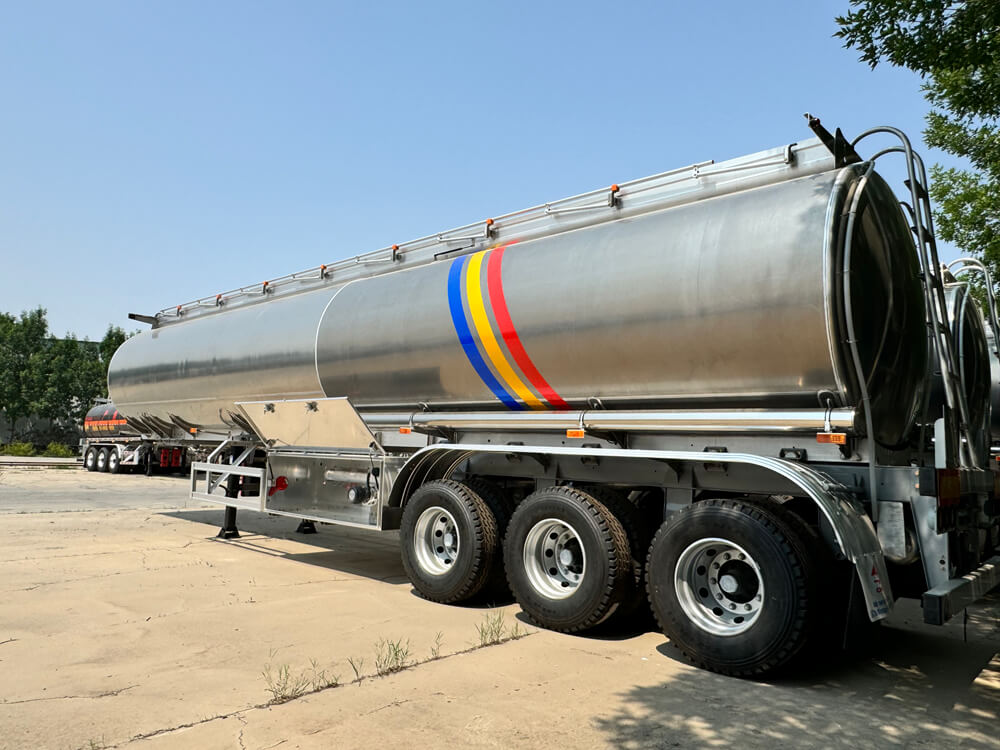
For modern on-highway logistics, aluminum is the clear industry standard. An aluminum fuel tanker trailer hauls refined petroleum, such as gasoline and diesel, with unmatched efficiency. From an engineering standpoint, its unique physical properties offer distinct economic advantages that compound over the life of the asset.
The most significant advantage is its incredibly low overall density. For instance, a standard 45,000-liter (approx. 11,800 gallons) aluminum trailer typically utilizes 5454-grade aluminum alloy with a 5mm to 6mm shell thickness. This configuration can weigh 2,000 to 3,000 pounds less than an identical steel unit. That lower tare weight allows you to legally pack more gallons into every single dispatch.
Additionally, aluminum naturally forms a protective oxide surface layer upon exposure to air. This provides excellent inherent resistance to rust and weather degradation, meaning these trailers do not require constant exterior painting and hold their secondary market value exceptionally well.
However, aluminum manufacturing processes are more expensive than standard steel. Buyers should expect a premium price tag during initial acquisition. Furthermore, repairing structural damage is a highly complex process. Welding aluminum requires specialized TIG (Tungsten Inert Gas) skills, clean environments, and specific argon gas shielding to prevent weld porosity.
This equipment is best suited for long-haul, paved-highway delivery routes. It is the optimal choice for hauling refined gasoline, standard diesel, and aviation fuel where product purity is paramount.
When your operations move off the smooth pavement, priorities shift entirely. A carbon steel tanker trailer steps in as the rugged, heavy-duty solution. Constructed typically from high-tensile Q345 or similar structural steel, it remains a highly durable, traditional material for demanding transport environments.
Carbon steel is significantly cheaper to produce, cut, and form, resulting in a much lower initial purchase price. This makes it highly accessible for new owner-operators or fleets expanding rapidly on a tight budget.
In addition, steel is exceptionally strong and highly malleable. Imagine navigating pothole-ridden logging roads or active mining sites with 40,000 liters of crude oil. Under severe torsional stress, steel tends to bend or dent rather than crack openly. If a tear does occur, repairing a carbon steel tank is a straightforward process; almost any commercial heavy-duty repair facility can weld it quickly and cost-effectively.
The high density of carbon steel makes these trailers quite heavy, which directly reduces your maximum legal payload capacity. You will transport fewer gallons of fuel per highway trip compared to an aluminum setup. Moreover, carbon steel is highly susceptible to rapid rust formation. To prevent product contamination, these tanks require specialized internal epoxy linings and strict exterior paint maintenance.
We highly recommend carbon steel for harsh, rough terrains like construction zones, agricultural fields, and mining sites. It is the practical choice for hauling crude oil, heavy fuel oils, or standard diesel in off-road conditions.
Some logistics companies handle a diverse, unpredictable portfolio of volatile liquids. In these scenarios, a stainless steel tanker trailer represents the pinnacle of modern transport engineering, seamlessly combining rugged structural strength with unparalleled chemical resistance.
Typically utilizing 304 or 316L grade alloys, stainless steel contains high levels of chromium and nickel, preventing reactions with harsh chemicals. It is the absolute gold standard for highly corrosive cargo. The non-porous nature of the metal means the interior can be easily and thoroughly washed out. You can legally haul acidic chemicals on Monday, wash the tank, and haul standard diesel on Friday without fear of cross-contamination.
The primary downside is weight; stainless steel is extremely dense. This massive weight penalty reduces your overall payload for standard fuels. Additionally, due to volatile raw alloy costs and difficult machining processes, it requires a massive initial capital investment.
This premium tank is positioned for specialized, multi-purpose chemical logistics fleets that require frequent washouts and handle highly diverse cargo types.
Choosing the right material requires comparing hard operational metrics. No single material is universally superior for every transport scenario. Fleet managers must weigh upfront costs against daily route efficiency.
Material Type | Initial Cost | Tare Weight (Payload) | Corrosion Resistance | Ideal Operating Environment |
|---|---|---|---|---|
Aluminum | High | Very Light (Max Payload) | High (Natural Oxide Layer) | Paved highways, long-haul routes |
Carbon Steel | Low | Heavy (Reduced Payload) | Low (Requires Linings/Paint) | Off-road, mining, construction |
Stainless Steel | Very High | Very Heavy | Ultimate (Chemical Grade) | Mixed chemical and fuel transport |
Capital allocation is a primary concern for any fleet operator. While carbon steel offers the absolute lowest barrier to market entry, upfront savings do not always equal long-term profitability. An aluminum tank frequently yields a much higher ROI eventually. The lighter weight saves diesel fuel when the trailer is running empty, and the increased payload generates more revenue per loaded mile. Over a ten-year lifespan, these daily financial gains compound significantly.
Safety is critical in hazardous material transport. Carbon steel absorbs heavy impacts exceptionally well during severe crashes. In a rollover event, it bends rather than tears, making it the rugged choice for unpredictable environments. While older aluminum alloys were considered brittle, modern engineering using 5000-series aluminum has vastly improved structural safety profiles, allowing them to meet and exceed strict DOT and federal highway safety standards.
Procurement decisions should never be based on guesswork. You must align the equipment with your daily route realities. Follow this practical framework to select your next oil tanker semi trailer.
The specific liquid you haul dictates the metal you need. Standard gasoline and diesel are relatively clean and non-corrosive, making aluminum perfectly suited for the job. Conversely, aviation fuel requires extreme purity to prevent catastrophic jet engine failure; rust contamination is strictly prohibited, mandating aluminum or stainless steel. If you haul harsh acids or fertilizers, stainless steel is absolutely mandatory.
Road conditions severely impact the lifespan of heavy commercial frames. Smooth interstate highways cause minimal stress, allowing aluminum trailers to thrive for decades. However, off-road environments introduce constant vibration and severe twisting forces. These torsional stresses can fatigue and crack aluminum welds over long periods. If your trucks spend 50% of their time on dirt roads, carbon steel handles that physical punishment much more effectively.
Your equipment lifecycle strategy heavily influences the procurement process. Do you plan to run the trailer for just five years before upgrading? An aluminum trailer offers excellent short-term resale market value. If capital is extremely tight currently, carbon steel makes sense to get operations moving. Always calculate the total cost of ownership—factoring in payload gains, fuel savings, and maintenance—not just the sticker price.
Proper maintenance protects your massive capital investment. Neglecting routine service leads to costly operational downtime, DOT fines, and hazardous spills. Implementing a strict preventative schedule extends the trailer's functional lifespan significantly.
Visual inspections should be conducted before every single highway trip. Look for signs of metal stress near the landing gear, suspension hangers, and kingpin plate. For aluminum tanks, pay close attention to all welded seams, especially around internal baffles. They are highly susceptible to micro-cracking from continuous road vibration. Catching a hairline crack early prevents a catastrophic cargo spill.
Carbon steel tanks demand vigilant exterior and interior maintenance protocols. Any chip in the exterior paint invites rapid rust formation; touch up exposed steel immediately with an industrial-grade protective zinc primer. Furthermore, internal epoxy linings must be inspected for flaking constantly using a micrometer to check thickness. Regardless of material, wash the trailer frequently to remove harsh road salt and grime.
The tank shell is only as secure as its weakest valve. Discharge valves, API adapters, and vapor recovery dome covers require meticulous mechanical attention. Rubber O-rings and seals degrade naturally over time due to friction and chemical exposure. Extreme ambient temperatures accelerate this inevitable degradation process significantly. Test the pneumatic emergency shut-off systems monthly to ensure rapid safety response.
Depending on the specific configuration and capacity (e.g., 45,000 liters), aluminum trailers are typically 2,000 to 3,000 pounds lighter than their carbon steel counterparts. This weight reduction allows you to legally transport hundreds of extra gallons per trip.
It is strictly not recommended to use standard carbon steel for aviation fuel. Jet engines require extreme fuel purity. Even microscopic rust flakes from a steel tank can cause catastrophic engine failure. Aluminum or stainless steel is required to prevent contamination entirely.
Yes, compared to steel. Repairing aluminum requires specialized TIG welding equipment, highly trained technicians, and a clean, draft-free environment to prevent weld contamination. While steel can be welded in almost any shop, aluminum requires a certified specialist.
With proper preventative maintenance, aluminum or carbon steel tanks can easily last 15 to 20 years in active service. A premium stainless steel tank, due to its incredible corrosion resistance, can often exceed 25 years of operational life.
Carbon and stainless steel generally offer superior structural rigidity and puncture resistance during a violent rollover. They tend to deform and crush rather than tear. However, modern aluminum trailers are engineered with heavy-duty extrusion rails and reinforced bulkheads, ensuring they meet the same strict federal highway safety standards as steel.
Choosing between aluminum, carbon steel, and stainless steel ultimately comes down to your specific route demands, cargo types, and payload goals. If you want to maximize your highway fuel delivery profits, lightweight aluminum is the clear winner. If you are tackling rough off-road terrain, carbon steel provides the rugged durability you need.
Stop letting heavy, inefficient equipment eat into your margins. Evaluate your operational data, run the payload math, and spec the exact trailer your business requires. For industry-leading engineering, detailed specs, and a wide range of high-quality liquid transport solutions, explore the professional lineup at chivehicles.com today.