Views: 174 Author: Site Editor Publish Time: 2026-06-22 Origin: Site
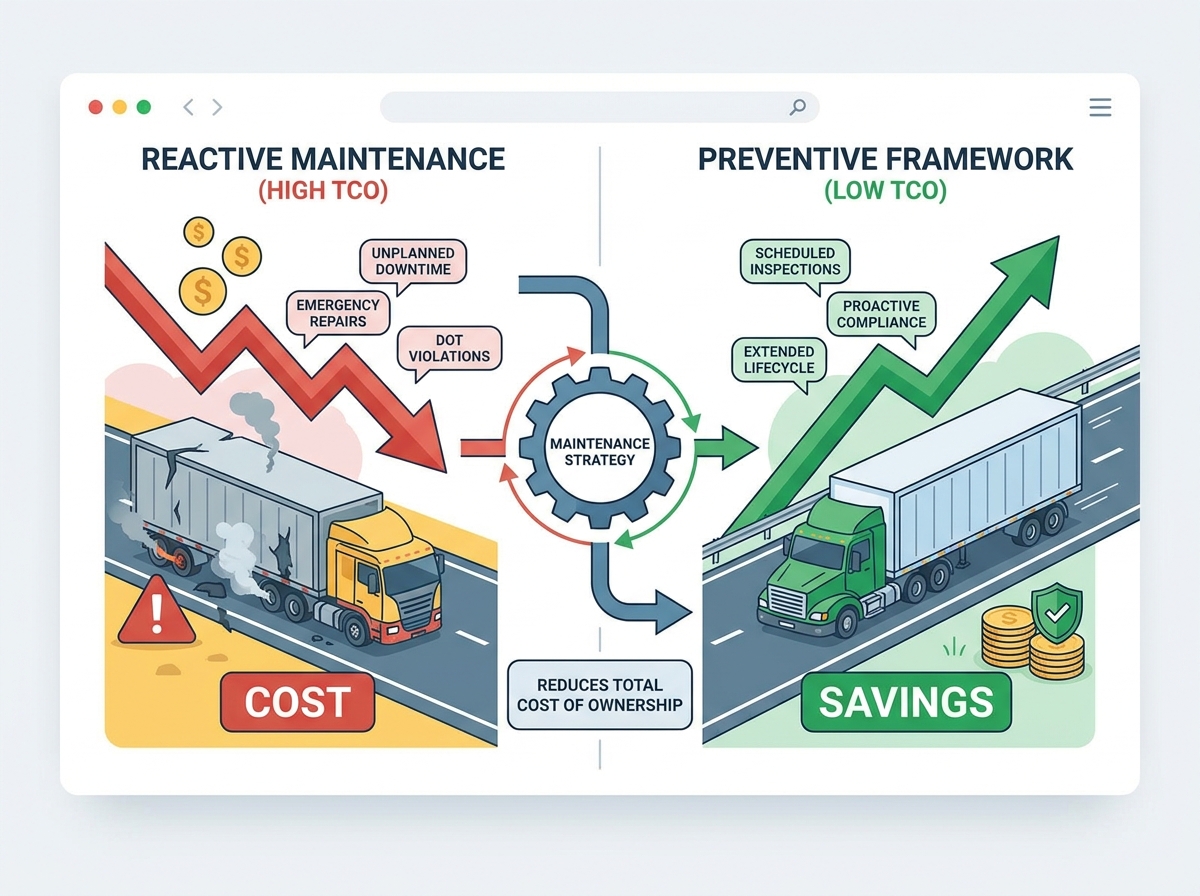
Operating a commercial fleet requires looking far beyond immediate dispatch needs. You must treat asset upkeep not as a standard operational chore, but as a critical financial strategy. Every time a driver hits the highway, unseen mechanical stress compounds on the equipment. Ignoring minor wear often leads directly to catastrophic on-road failures. You risk triggering severe DOT out-of-service violations. Premium towing fees and extended downtime will quickly destroy your profit margins. A structured preventive maintenance program acts as your ultimate defense. It ensures constant audit readiness while keeping assets generating steady revenue. We designed this guide to help you build a highly resilient maintenance plan. You will discover the commercial frameworks and specific inspection intervals required for success. You will learn how to shift from reactive repairs to a proactive operational model. This approach keeps your Semi Trailer road-legal, efficient, and highly profitable.
Proactive ROI: Preventive maintenance drastically reduces TCO by catching sub-components before they cause catastrophic system failures.
Interval Specificity: Service schedules must be customized based on load profiles; a heavy duty semi trailer requires more aggressive greasing and suspension checks than standard dry vans.
Compliance Integration: Daily pre-trip routines are the first line of defense against costly DOT inspection violations.
Resource Allocation: Structuring a PM program requires clear thresholds for what to handle in-house versus when to utilize certified commercial trailer technicians.
Fleet operators often struggle to quantify the true cost of deferred maintenance. You must compare the predictable expense of scheduled shop time against the cascading penalties of roadside breakdowns. A proactive approach transforms variable repair expenses into fixed, manageable budget items. When a trailer fails in transit, you pay for much more than just replacement parts. You face premium mobile mechanic rates. You incur heavy towing fees. You also suffer missed delivery penalties and severely damaged customer relationships. Scheduled shop time eliminates these unpredictable financial shocks entirely.
Tracking historical repair data establishes a clear baseline for your operating expenses. You cannot improve what you do not measure. We strongly recommend digitizing all service records. This data reveals recurring failure points across your fleet. It allows you to order replacement parts proactively before stock shortages occur. Over time, this data-driven strategy creates a highly predictable operating budget.
You must define success through concrete, measurable metrics. A robust maintenance program directly reduces out-of-service inspection rates. It extends the natural lifecycle of expensive components like axles and suspensions. Most importantly, it improves overall asset utilization. Equipment sitting in a repair bay generates zero revenue.
Cost Comparison: Scheduled Maintenance vs. Reactive Breakdowns | ||
Cost Category | Scheduled Preventive Service | Unplanned Roadside Breakdown |
|---|---|---|
Labor Rates | Standard shop rates during business hours. | Premium emergency call-out and mobile rates. |
Towing Expenses | Zero. Equipment arrives under its own power. | Extremely high, often exceeding standard repair costs. |
Parts Availability | Pre-ordered at wholesale bulk pricing. | Retail markup pricing due to immediate necessity. |
Revenue Impact | Minimal. Scheduled during off-peak utilization. | Severe. Dropped loads, missed windows, unhappy clients. |
Drivers serve as the absolute first line of defense against equipment failure. A rigorous pre-trip inspection routine identifies obvious structural deviations before the unit ever leaves the yard. You must mandate thorough visual walkarounds every single morning. This visual baseline sets the tone for daily operational safety. Small catches early in the day prevent massive mechanical disasters later.
Tire and hub integrity demand relentless daily scrutiny. Drivers must perform quick checks for proper inflation levels. They should verify tread depth consistency across all axles. Leaking hub seals present a massive fire hazard if left unchecked. A dry hub assembly will seize and destroy the entire wheel end.
Air and electrical connections require equal attention during the walkaround. Drivers must verify the structural integrity of all gladhands. They should inspect air hoses for chafing or dry rot. Testing the 7-way connectors prevents sudden lighting failures. A loose electrical connection easily invites a DOT traffic stop.
Cargo securement systems hold the entire payload together safely. You must inspect these mechanisms daily to prevent load shifts. Compromised securement devices cause rollover events. Drivers should follow these specific checkpoints:
Test ratchets and winches for smooth mechanical operation.
Inspect all nylon tie-down straps for fraying or severe cuts.
Check rear door hinges and locking cams for structural bending.
Ensure floorboards show no signs of rotting or puncturing.
Verify all reflective DOT tape remains visible and clean.
Building an effective maintenance program requires balancing calendar-based inspections against mileage-driven triggers. A trailer running local routes degrades differently than one crossing the country. You must align your service intervals with actual asset utilization. Many fleets deploy calendar-based checks to capture weather-related degradation. Conversely, they use mileage triggers to track mechanical wear on wheel ends and brakes.
Equipment usage heavily dictates these timelines. Specialized usage accelerates wear across the entire chassis. A Heavy Duty Semi Trailer hauling over-dimensional loads demands shorter service intervals. Extreme payloads stress structural welds and air ride suspensions constantly. You cannot treat a lowboy moving excavators like a standard dry van moving paper products. The heavier the payload, the tighter your inspection intervals must become.
We recommend organizing your maintenance strategy into distinct service tiers. This structured framework keeps technicians focused. It prevents mechanics from overlooking crucial diagnostic steps.
PM A (Basic Service): Perform this service every 30 days. Mechanics check lighting systems, verify tire pressure, and complete basic chassis lubrication. They also drain air tanks to remove condensation.
PM B (Intermediate Service): Execute this service every 90 days. It includes all PM A tasks. Mechanics manually adjust brakes and torque suspension bolts. They conduct detailed air system leak-down tests.
PM C (Comprehensive Service): Schedule this service annually. It includes PM A and PM B tasks. Mechanics perform the mandatory DOT annual inspection. They rebuild wheel ends, check structural alignment, and repack wheel bearings.
Braking systems represent your most critical safety component. You must monitor brake shoe thickness proactively. Mechanics should test slack adjuster functionality during every shop visit. Air tanks accumulate dangerous moisture over time. Drivers and technicians must drain these tanks routinely. You easily prevent winter freeze-ups by keeping the air system entirely dry. Frozen air lines lead to locked brakes and destroyed tires.
Suspension systems and lubrication schedules go hand in hand. Strict greasing schedules prevent catastrophic metal-on-metal friction. You must heavily grease the fifth wheel plate and kingpin. Landing gear mechanisms require regular lubrication to function smoothly under heavy loads. Consistent greasing extends component life significantly. It also reduces driver fatigue by making trailer coupling much easier.
Tire management requires highly objective evaluation criteria. You should treat tire wear patterns as advanced diagnostic tools. Tires communicate the hidden health of the entire chassis. Recognizing these patterns saves thousands in replacement costs.
Tread Wear Diagnostic Chart | ||
Wear Pattern Observed | Likely Mechanical Cause | Required Corrective Action |
|---|---|---|
Cupping or Scalloping | Worn shock absorbers or loose wheel bearings. | Replace shocks and retorque wheel ends immediately. |
Inner / Outer Edge Wear | Severe axle misalignment or bent axle tube. | Perform a laser alignment. Inspect axle straightness. |
Center Tread Wear | Chronic over-inflation of the tire. | Adjust air pressure to match load specifications. |
Flat Spotting | Locked brakes or aggressive panic stopping. | Check ABS sensors and adjust slack adjusters. |
Common Mistake: Many fleets replace irregularly worn tires without diagnosing the root cause. The new tire will simply suffer the exact same irregular wear. Always fix the mechanical defect before mounting fresh rubber.
Navigating FMCSA regulations requires discipline and meticulous organization. You must establish strong regulatory baselines across your entire operation. Every commercial trailer requires a comprehensive annual DOT inspection. You must carry the proper documentation to prove compliance at weigh stations. Failing to present these documents results in immediate fines. It also triggers deeper, more invasive inspections by regulatory officers.
Record-keeping realities have shifted dramatically toward digital solutions. Paper logs easily vanish or suffer water damage in the cab. Digitized maintenance logs protect fleets during liability investigations. Transparent historical records prove your commitment to public safety. If a post-accident audit occurs, these digital records become your strongest legal defense. They demonstrate a consistent history of proactive mechanical care.
Avoiding CVSA Out-of-Service criteria remains the ultimate daily goal. Inspectors look for specific thresholds to trigger roadside shutdowns. They target inoperative turn signals and burned-out brake lights instantly. The "20 percent rule" dictates that if 20 percent of a vehicle's brakes are defective, the unit cannot move. Bald tires and exposed casing cords will ground a load immediately. Understanding these specific triggers helps mechanics prioritize critical repairs before dispatch.
Fleet managers face a constant battle regarding resource allocation. You must define clear capability thresholds for your operation. Determine exactly what is safe and cost-effective to handle internally. Basic greasing, mudflap replacement, and lighting repairs belong in-house. These low-complexity tasks require minimal tooling. Conversely, you should outsource tasks requiring specialized software or heavy machinery. Structural aluminum welding, ABS diagnostics, and axle alignments require certified commercial trailer technicians.
Evaluating external service partners requires strict vetting criteria. You cannot trust your assets to just any local shop. Check their specific industry certifications before signing any service agreements. Verify their daily parts availability for your specific trailer brands. Demand strong mobile response capabilities for emergency roadside situations. Require clear turnaround time guarantees to protect your dispatch schedule. A strong service partner acts as an extension of your own business.
You need to take actionable next steps today. Audit your current fleet maintenance SOPs thoroughly. Identify where your daily pre-trip inspections fall short. Initiate a conversation with a qualified heavy-duty service provider in your region. Ask them to review your current interval schedules. Transitioning from reactive fixes to a structured framework demands immediate, decisive action.
Maintaining a commercial trailer represents an ongoing investment in safety, compliance, and profitability. It is never a sunk cost. Ignoring small defects guarantees massive financial penalties down the road. Transitioning from reactive repairs to a structured preventive framework requires discipline. You must establish strong daily routines. You must build the right external service partnerships to handle complex diagnostics.
Begin by downloading a standardized preventive maintenance checklist for your drivers. Schedule a comprehensive fleet audit to establish your current mechanical baseline. Finally, contact a certified service department to customize a schedule tailored to your specific freight profiles.
A: Load weights and vocational usage dictate exact service timelines. However, most fleets establish a baseline of monthly or 10,000-mile preventive maintenance intervals. High-mileage operations often require tighter schedules to prevent aggressive mechanical degradation.
A: Inspectors frequently cite burned-out exterior lights, severely misadjusted brakes, and underinflated tires. Missing reflective DOT tape and leaking wheel seals also rank highly. These actionable realities trigger immediate out-of-service violations.
A: Yes. Extreme payloads cause accelerated wear on structural welds, axles, and air suspensions. These specialized units demand significantly tighter service intervals. Mechanics must review suspension torque specs and chassis integrity much more frequently.
A: Fleets consistently see drastic reductions in emergency breakdown expenses. By catching minor defects early, you eliminate premium roadside labor rates and expensive towing fees. This strategy also extends brake and tire lifecycles, heavily boosting overall profitability.