Views: 165 Author: Site Editor Publish Time: 2026-06-26 Origin: Site
Look beyond the powerful trucks hauling goods across our highways. The true engine driving logistics profitability lies right behind them. A well-configured Semi Trailer serves as the critical variable defining fleet scalability, service reliability, and overall market success.
Power units drive physical movement, but trailers define what you can actually accomplish. Payload capacity, regulatory compliance, and cargo versatility depend entirely on your chosen configuration. Choosing the wrong setup instantly degrades efficiency. It exposes daily operations to unnecessary financial risks and missed revenue opportunities.
We designed this guide as a decision-making framework for logistics leaders. You will learn how to align structural designs to specific freight demands. You will also discover how to evaluate lifecycle economics objectively. Whether expanding a fleet or upgrading assets, these insights help you maximize operational returns and build a resilient supply chain.
Strategic Asset Alignment: The right semi trailer directly impacts Total Cost of Ownership (TCO) and cost-per-mile metrics.
Configuration Over Commoditization: Evaluating a freight semi trailer requires matching structural design (e.g., dry van, reefer, flatbed) to exact cargo profiles and route constraints.
Compliance as a Baseline: Regulatory adherence (GVWR limits, CARB compliance for reefers) is non-negotiable and heavily influences procurement decisions.
Risk Mitigation: Lifecycle maintenance, material durability, and driver familiarity are primary risk factors in asset deployment.
Logistics operators often view trailers as mere commodities. This mindset limits revenue potential. The structural design of your trailing equipment directly dictates your absolute profit ceiling. Strategic procurement transforms these assets into highly leveraged revenue generators.
Trailer dimensions and weight limits define your maximum revenue-generating payload per trip. Every cubic foot matters. Every pound saved on tare weight directly increases allowable cargo weight. You must carefully analyze the structural footprint. Lightweight components allow fleets to haul heavier shipments legally. Conversely, oversized internal dimensions capture more revenue for lightweight, bulky freight. You must analyze historical route data to find your optimal payload balance. Maximizing capacity utilization remains the fastest path to improved profit margins.
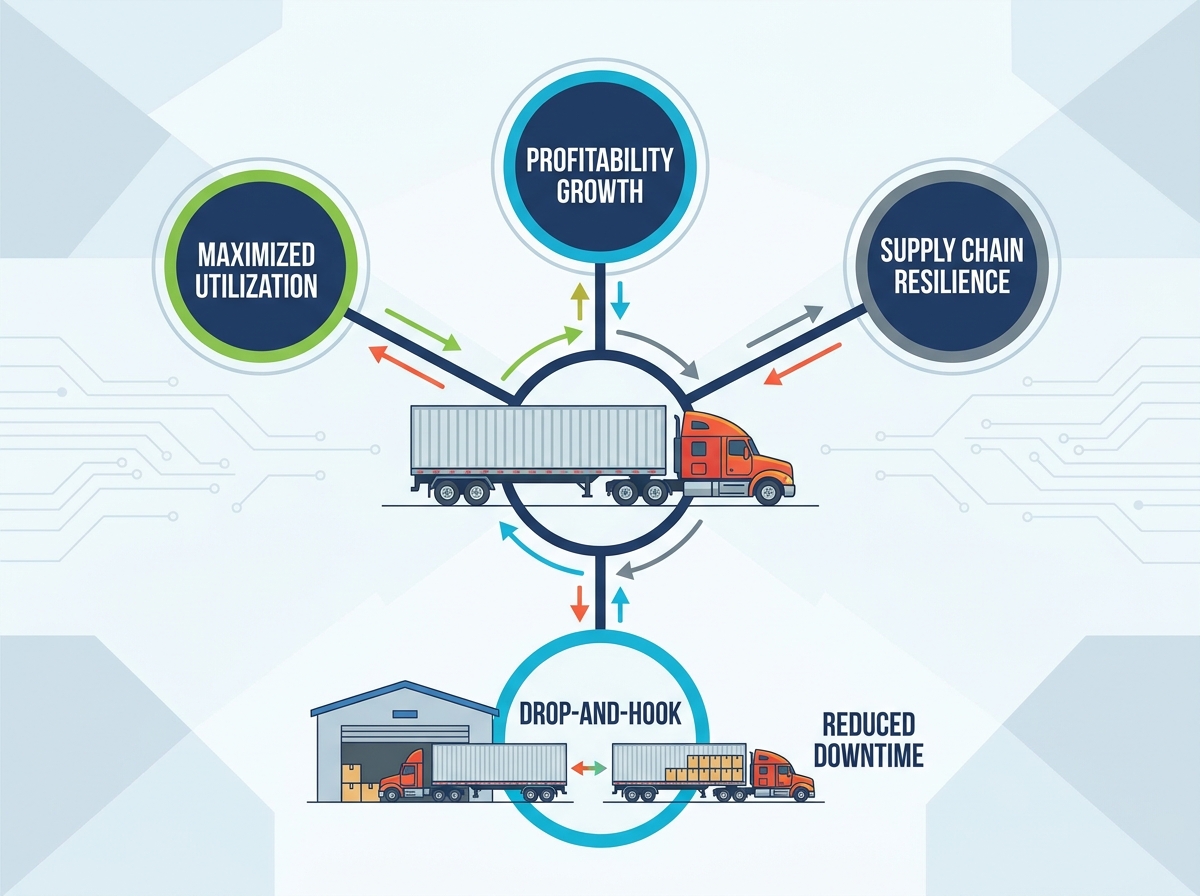
Modern supply chains demand speed. A robust trailer-to-tractor ratio enables highly efficient drop-and-hook models. Drivers simply uncouple an empty unit and attach a pre-loaded one. This operational advantage keeps power units moving continually. Live loading scenarios waste valuable hours. They force drivers to sit idle at distribution centers. Widespread trailer availability minimizes driver detention time. According to logistics operational standards, fleets utilizing drop-and-hook networks regularly achieve twenty percent higher daily mileage. This efficiency drives down operational expenses significantly.
Market volatility requires adaptable fleets. Owning your trailing equipment builds formidable supply chain resilience. Relying solely on third-party rentals leaves you vulnerable during capacity crunches. Seasonal volume spikes often deplete rental inventories regionally. Fleet owners control their own destiny. They pivot quickly when customer demands shift abruptly. Dedicated assets ensure you never miss high-margin spot freight opportunities. Asset ownership protects your service reputation when competitors struggle to find available equipment.
No single configuration handles every logistical challenge. You must match the structural engineering to your exact operational profile. Evaluating a Freight Semi Trailer requires understanding both the unique advantages and inherent limitations of each design.
Dry vans dominate global supply chains for good reason. They offer broad applicability across diverse industries. You achieve exceptionally high utilization rates hauling consumer packaged goods, electronics, and textiles. The fully enclosed box protects valuable cargo from severe weather elements. It also deters casual theft during transit.
However, dry vans carry strict constraints. They depend entirely on standardized dock heights for efficient loading. The rigid structural dimensions restrict your freight options. You cannot haul oversized machinery or irregularly shaped construction materials. Dimensional limits strictly cap your flexibility.
Cold chain logistics offer premium freight rates. Reefers grant you access to these high-margin markets. You can transport sensitive pharmaceuticals, fresh produce, and frozen goods safely. The insulated walls and advanced cooling units maintain precise temperature zones continually.
These specialized units demand rigorous management. Upfront capital requirements are substantially higher. The active cooling units consume additional diesel fuel. You also face aggressive emissions compliance risks, particularly in strict regulatory zones. Preventative maintenance schedules must remain flawless to avoid catastrophic cargo spoilage claims.
Open-deck trailing equipment serves heavy industries perfectly. Flatbeds represent the ultimate versatility play. They prove critical for construction materials, heavy machinery, and non-standard freight. You can load them from the sides, rear, or overhead using industrial cranes.
This versatility introduces significant operational friction. Securing open-deck loads requires specialized driver expertise. Improper strapping leads to severe liability issues. Cargo remains exposed to weather elements unless manually tarped. Tarping consumes time and increases the risk of driver injury. You face a inherently higher risk of cargo damage.
Trailer Application and Constraint Summary Chart | |||
Equipment Type | Primary Use Case | Major Operational Constraint | Revenue Potential |
|---|---|---|---|
Dry Van | Standard palletized goods, electronics | Dock-height dependency, dimensional caps | Moderate / Consistent |
Reefer | Cold chain, perishables, pharma | High maintenance, emissions compliance | High / Seasonal Spikes |
Flatbed | Machinery, construction materials | Load securing risks, weather exposure | High / Specialized |
Evaluating procurement options extends far beyond the initial purchase price. You must weigh structural features against long-term operational economics. Smart procurement strategies prioritize features generating measurable returns.
Material selection defines base profitability. Manufacturers typically offer aluminum or steel constructions. Steel costs less upfront and resists localized impact damage well. It suits rough construction environments perfectly. However, steel adds significant tare weight.
Aluminum components require a larger initial investment. Yet, the lighter material increases your legal payload capacity immediately. Hauling lighter empty equipment also generates long-term fuel savings. You must analyze your specific routes. High-mileage, weight-sensitive freight lanes heavily favor aluminum investments.
Fuel expenses dominate operational budgets. Aerodynamic add-ons represent a high-ROI upgrade category. Side skirts minimize undercarriage wind drag. Trailer tails streamline airflow behind the rear doors. Gap fairings reduce turbulence between the tractor and the trailing unit.
You must evaluate these upgrades against historical route data. Highway routes see substantial efficiency gains from aerodynamics. Vehicles running continuously at highway speeds recover aerodynamic costs quickly. Conversely, urban delivery routes yield minimal returns. Frequent stops negate aerodynamic advantages completely.
Estimated Aerodynamic ROI Chart (Highway Applications) | ||
Aerodynamic Component | Estimated Drag Reduction | Estimated Fuel Savings |
|---|---|---|
Side Skirts | Up to 5% | 4% - 5% |
Trailer Tails (Boat Tails) | Up to 6% | 5% - 6% |
Tractor-Trailer Gap Fairings | Up to 2% | 1% - 2% |
Connectivity transforms passive metal boxes into intelligent logistics nodes. You must assess modern telematics integration capabilities. GPS modules optimize fleet visibility and improve dispatch routing. Tire pressure monitoring systems prevent catastrophic blowouts on the road.
Smart cargo sensors detect empty space precisely. They also monitor door opening events to prevent theft. Integrating these data streams enables preemptive maintenance scheduling. Finding a slow tire leak proactively costs far less than managing a roadside emergency later.
Equipment must meet complex regulatory mandates constantly. Federal size and weight limits dictate baseline structural requirements. The Department of Transportation enforces rigid 80,000 lbs gross vehicle limits.
State-specific regulations complicate matters further. Bridge laws dictate specific tandem axle spacing requirements. You must configure axles to distribute weight legally across targeted states. Furthermore, environmental mandates target specific equipment types. California's rigorous emissions boards strictly regulate the auxiliary power units attached to reefers. Non-compliance results in severe financial penalties and impounded equipment.
Procurement represents just the first hurdle. Deploying new equipment introduces immediate operational friction. You must anticipate maintenance demands, infrastructure limits, and driver adaptation curves proactively.
Equipment failures destroy delivery schedules. Downtime costs encompass far more than replacement parts. They include lost revenue, driver compensation, and damaged customer relationships. Historical data highlights common failure points repeatedly. Brakes, tires, and suspension systems degrade predictably.
You must establish rigid preventative maintenance schedules. Neglecting routine inspections guarantees expensive roadside failures later. Implement a strict, standardized inspection framework across your entire network.
Tire Management: Calibrate tire pressure systems daily to prevent uneven tread wear.
Brake Inspections: Measure brake pad thickness and check slack adjusters weekly.
Structural Integrity: Inspect suspension components and cross-members for hairline stress fractures monthly.
System Testing: Test reefer cooling units and defrost cycles extensively before any sensitive dispatch.
Advanced equipment requires skilled operators. You cannot simply hand keys to inexperienced drivers. Specialized trailing units introduce significant safety hurdles and new liabilities.
Flatbed operations demand rigorous load-securing training. Drivers must understand weight distribution physics accurately. Improperly balanced loads cause catastrophic rollovers. Reefer operations require precise temperature management training. Drivers must understand multi-temp zones and airflow requirements. Investing in comprehensive driver training mitigates your operational liability directly.
Your physical facilities must support your equipment choices. Many fleets ignore infrastructure dependencies until problems arise. You must evaluate terminal space objectively. Can your yards handle the turning radius of longer configurations?
Evaluate your loading dock compatibility closely. Low-profile step decks cannot utilize standard dry van dock levelers easily. Furthermore, assess your maintenance facility capabilities. Repairing advanced reefer units requires specialized diagnostic tools and certified technicians. Audit your physical footprint before expanding specialized asset inventories.
Executing a successful expansion requires disciplined financial modeling. You must evaluate procurement paths and vet vendor partnerships rigorously. Emotional purchasing decisions usually lead to bloated balance sheets.
Do not base decisions on the initial sticker price alone. You must define a comprehensive framework for calculating long-term profitability. Track all projected expenses rigorously over the asset's lifespan.
Calculate acquisition costs inclusive of financing rates. Project routine maintenance expenses based on expected annual mileage. Estimate the usable lifespan realistically. Finally, research the estimated residual salvage value. Premium aluminum equipment generally retains higher resale value than budget steel variants. A complete financial model reveals the true economic impact of your choices.
The decision to lease or buy dictates your capital flexibility. Each path serves entirely different strategic objectives.
Evaluate short-term lease agreements carefully. Leasing mitigates risks during sudden seasonal freight spikes. It allows you to test new market verticals without committing heavy capital upfront. You preserve cash reserves effectively. The leasing company often absorbs major maintenance liabilities.
Analyze purchasing options for long-term stability. Buying favors predictable, high-volume dedicated lanes. Ownership builds equity over time. If you project high utilization rates for five straight years, purchasing generally delivers superior return on investment expectations.
Choosing the right manufacturing partner ensures long-term reliability. Do not treat dealers as simple transactional vendors. Establish strict criteria for selecting your manufacturing partner. You are buying a long-term operational relationship.
Warranty Coverage: Demand comprehensive details covering structural integrity and specific component lifespans.
Parts Availability: Verify regional distribution speed for critical replacement parts.
Engineering Support: Assess their ability to provide custom structural modifications post-sale.
Data Transparency: Request historical warranty claim data to identify common manufacturing defects proactively.
A semi trailer remains a highly engineered operational tool, not a commoditized box. Your choices regarding material science, aerodynamic profiles, and structural types cascade through every level of your business. They dictate payload efficiency, driver safety, and regulatory compliance.
Aligning precise equipment specifications with your specific business model remains the only reliable path to maximizing logistics ROI. Settling for standardized equipment in highly specialized freight markets destroys profit margins silently.
Take proactive steps today. Audit your current fleet utilization rates thoroughly. Identify lanes where capacity remains artificially constrained by improper equipment. Request a comprehensive consultation to configure a trailing solution tailored exactly to your unique freight parameters. Your profitability depends entirely on the hardware trailing right behind your trucks.
A: A commercial unit typically lasts 10 to 15 years. This timeline is highly dependent on the equipment type. Dry vans generally outlast complex refrigerated units. Material composition also plays a role, as aluminum resists rust better than steel. The rigor of your preventative maintenance program ultimately determines the true operational lifespan.
A: The trailing unit heavily influences overall fuel consumption. Aerodynamic additions like side skirts and rear tails reduce wind drag significantly. Specifying low rolling resistance tires helps further. Finally, reducing the total tare weight ensures the tractor works less to move the combined mass, thereby improving total miles-per-gallon performance.
A: Leasing proves strategically optimal for mitigating short-term capacity crunches. It helps preserve operating capital and outsources heavy maintenance liabilities. It is ideal for testing new markets. Buying favors operations with long-term, high-utilization predictability on dedicated lanes where building asset equity makes financial sense.
A: Federal regulations cap the gross vehicle weight rating at 80,000 lbs. This includes the tractor, trailing unit, and all cargo combined. Because of this cap, standard payload limits hover around 43,000 to 45,000 lbs. The exact number is directly dictated by the combined empty tare weight of both the truck and the trailing equipment.