
In the construction and building materials industry, the efficient transportation of bulk cement is critical for project success. Bulk cement trailers are specialized vehicles designed to transport large quantities of cement from production facilities to construction sites or storage locations. These trailers have revolutionized the way cement is moved, ensuring safety, efficiency, and cost-effectiveness.
This article will explore what a cement trailer is, its types, key features, benefits, and why investing in the right equipment can make a significant difference for construction and logistics operations.
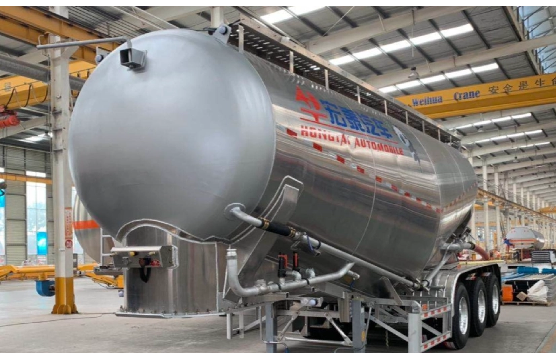
A bulk cement trailer is a type of semi-trailer specifically designed for transporting dry cement in bulk. Unlike traditional methods of transporting cement in bags, bulk cement trailers carry large quantities of cement in enclosed tanks or compartments, which helps prevent contamination, moisture absorption, and material loss.
The trailer is typically attached to a tractor unit and is capable of carrying tens of tons of cement at a time, making it an indispensable part of modern construction logistics. By moving cement in bulk, companies can reduce handling costs, improve delivery efficiency, and maintain the quality of cement over long distances.
A standard cement trailer is composed of several key components:
Tank/Storage Compartment: The main body of the trailer, usually cylindrical or semi-cylindrical, is designed to hold dry cement securely.
Discharge System: Most bulk cement trailers are equipped with pneumatic or screw-type discharge systems that allow for easy unloading at the site.
Chassis and Suspension: Built to withstand heavy loads, the chassis supports the weight of the cement while providing stability on the road.
Air Compressor System: For pneumatic trailers, the air compressor ensures smooth unloading by creating the pressure needed to move cement out of the tank.
Safety Features: Modern trailers include safety valves, pressure gauges, and reinforced structures to prevent accidents during transit.
Each component is engineered to ensure the secure transport of cement while minimizing losses and ensuring timely delivery.
There are several types of bulk cement trailers, each suited for specific applications:
These trailers use compressed air to discharge cement into storage silos or hoppers. They are highly efficient, reduce manual labor, and minimize material loss. Pneumatic trailers are widely used for long-distance transport and in large-scale construction projects.
Also known as auger trailers, they use a mechanical screw to move cement from the tank to the discharge point. They are particularly effective in sites where precise placement of cement is required, such as batching plants.
These trailers feature a sloped bottom that allows cement to flow toward the discharge outlet under gravity. They are simple, cost-effective, and suitable for short-distance deliveries or smaller quantities of cement.
Some bulk cement trailers are designed with multiple compartments to transport different types of cement simultaneously or to allow staged unloading at different sites.
Investing in a bulk cement trailer offers numerous advantages that make it an essential asset for modern construction and cement logistics. These benefits extend beyond simple transportation, impacting efficiency, safety, and sustainability.
Increased Efficiency
Transporting cement in bulk drastically reduces the time required for loading and unloading. Pneumatic trailers, for example, can discharge several tons of cement within minutes, compared to hours if handled manually in bags. This rapid unloading enables construction projects to maintain steady progress without delays, ensuring that timelines and schedules are met.
Reduced Labor Costs
Handling traditional bagged cement requires significant manual labor for loading, transport, and unloading. Bulk cement trailers automate most of these processes, reducing the need for large workforces. Fewer labor requirements translate to lower operational costs and allow workers to focus on other essential tasks on the construction site.
Minimized Material Loss
Cement is highly sensitive to moisture and contamination, and improper handling can lead to substantial losses. Bulk trailers provide a sealed and secure environment, protecting cement from external elements and preventing material degradation during transit. This ensures that the product arrives at the site in optimal condition, maintaining its quality and usability.
Environmental Benefits
By eliminating the need for thousands of individual cement bags and reducing spillage, bulk trailers contribute to environmentally sustainable practices. Less packaging waste and fewer discarded materials reduce the ecological footprint of construction activities.
Scalability for Large Projects
Large-scale construction projects often require tens or hundreds of tons of cement. Bulk trailers can transport large quantities in a single trip, making them ideal for high-volume operations and minimizing the number of trips needed, which saves both time and fuel.
Safety Improvements
Modern bulk cement trailers are engineered with reinforced structures, safety valves, and monitoring systems to minimize risks during transportation and unloading. These features protect operators, reduce accidents, and create a safer working environment overall.
In summary, bulk cement trailers combine efficiency, cost-effectiveness, sustainability, and safety, making them a vital tool in modern construction logistics.
Bulk cement trailers are used in various sectors, including:
Construction Sites: Delivering cement directly to mixers or batching plants.
Concrete Production Facilities: Supplying large-scale concrete plants efficiently.
Infrastructure Projects: Roads, bridges, and tunnels require reliable bulk cement transport for continuous operations.
Storage Silos: Bulk trailers can fill storage silos at cement depots or warehouses efficiently.
Selecting the right bulk cement trailer depends on several factors:
Volume Requirements: Assess the average quantity of cement transported per trip.
Distance: Pneumatic trailers are better for long-distance transport, while hopper trailers suit short distances.
Site Conditions: Consider terrain, unloading requirements, and space limitations.
Budget and ROI: Balance upfront investment with long-term efficiency and labor savings.
Maintenance and Reliability: Look for trailers with durable components and easy access for maintenance.
By evaluating these factors, construction companies can maximize efficiency, minimize costs, and ensure timely delivery of high-quality cement.
Proper maintenance ensures the longevity and efficiency of a cement trailer. Key practices include:
Regular Inspection: Check the tank, discharge system, chassis, and air compressor regularly.
Cleaning: Remove residual cement to prevent clogging and corrosion.
Lubrication: Maintain moving parts such as screws and augers to prevent wear.
Safety Checks: Inspect valves, pressure gauges, and suspension components periodically.
Professional Servicing: Schedule annual or biannual servicing for complex pneumatic systems.
Routine maintenance reduces downtime, improves safety, and extends the life of the trailer.
As the construction industry grows, innovations in bulk cement transport are becoming more important:
Automation and Monitoring: Smart trailers with sensors to monitor load, pressure, and location in real-time.
Eco-Friendly Designs: Lightweight, corrosion-resistant materials reduce fuel consumption and emissions.
Integration with Logistics Software: Streamlining delivery schedules, fleet management, and inventory tracking.
Multi-Function Trailers: Capable of transporting multiple materials or different cement types simultaneously.
These developments ensure that bulk cement transport remains efficient, safe, and environmentally sustainable.
Bulk cement trailers have become essential in modern construction and concrete production. They provide efficient, safe, and cost-effective transport of cement, reducing labor, minimizing material loss, and supporting large-scale projects.
Choosing the right trailer, maintaining it properly, and integrating it into your logistics system can significantly improve operational efficiency and project timelines.
For companies looking to upgrade their cement transport capabilities with reliable and high-quality equipment, China Hongtai International Vehicles Co., Ltd. offers a wide range of bulk cement trailers designed to meet modern construction demands. Their expertise ensures that construction projects run smoothly while maintaining safety, efficiency, and cost-effectiveness.


