
Views: 0 Author: Site Editor Publish Time: 2026-11-26 Origin: Site


A bulk cement trailer needs aeration control because tank pressure alone cannot make settled cement feed evenly. Air must reach powder near the outlet at a rate the conveying line and receiving silo can handle. That balance determines how steadily the trailer unloads and how much cement remains aboard.
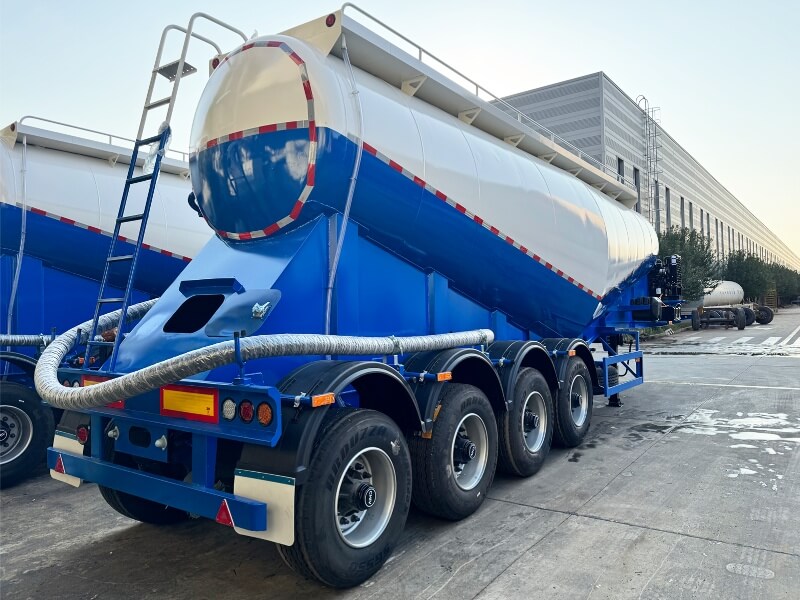
During a road journey, dry cement can settle into a closely packed bed. At the plant, the outlet may sit beneath tonnes of powder, yet only the material directly above it moves freely. Aeration introduces air beneath the cement through porous pads or fabric. As air spreads upward, it supports part of the powder’s weight, allowing particles to move more readily past one another. The sloping floor can then guide loosened cement toward the outlet. This process, called fluidization, does its most important work where the powder needs to start moving.
A tank gauge measures pressure at its connection point. It cannot show how evenly air passes through the bed. Air may find an open path through one section while powder remains packed a short distance away. The gauge can therefore show normal tank pressure during an irregular discharge. For a buyer comparing a bulk cement trailer range, a cross-section showing the pads, floor slopes and discharge openings is more informative than a pressure figure alone. It shows which parts of the load have an aerated path to the outlet.
Follow the cement from the tank floor to the silo. Inside the hopper, aeration loosens the powder so it can feed the opening. A pressure difference helps move that material into the product line. From there, conveying air carries it through the hose and up the plant’s fill pipe. Some trailers have a separate air branch feeding the discharge line. Where fitted, it assists material already in the pipe. Air introduced at that point cannot reach a pocket of powder stranded on a hopper slope.
If the hopper releases cement faster than the line can carry it, solids can accumulate and delivery can become intermittent. If too little powder reaches the outlet, air can keep moving while the plant receives little cement. These two conditions can produce the same complaint from the customer: unloading takes too long. They call for different checks. For the first, examine the conveying duty and line layout. For the second, examine how the hopper feeds. A schematic identifying both air paths gives the buyer and supplier a common starting point.
Early in a delivery, a deep bed of cement covers the aeration surface. As the hopper empties, one part of that surface may clear while a pocket of powder still covers the opposite slope. Air can escape more readily through the exposed area. The compressor may keep supplying air, but a smaller share reaches the remaining cement. This explains how a trailer can deliver most of its load quickly and then spend a disproportionate amount of time on the final tonnes.
On a tank with one central outlet, the buyer needs to understand how cement from both ends reaches the active bed. On a multi-hopper tank, a second question matters. Once one hopper clears, can the air distribution system continue supplying the section that still contains powder? The difference between V-shaped and W-shaped bulk cement trailers is relevant here because the layouts can have different numbers of beds and outlets. Ask for the air circuit of the model being quoted. The tank profile alone tells you little about how its zones are controlled.
A recurring residue pattern can narrow the investigation. If the same pocket retains cement after comparable deliveries at different plants, the local pad, its air supply and the floor around it deserve attention. If the entire fleet takes longer at one receiving point, the common fill line deserves an earlier look. Neither observation proves a fault, but each points to a specific part of the system worth investigating before investing in a higher-capacity compressor.
The plant receives conveying air along with the cement. Powder drops into storage, while air must leave through the silo’s venting and filtration system. A restricted filter reduces that outlet capacity. The end of delivery presents a particular concern because little powder remains to limit a rush of air from the pressurized tanker. A trailer can be within its own pressure rating while the receiving silo experiences excessive pressure. The plant’s permitted delivery conditions and functioning silo protection are therefore part of the unloading specification.
Consider a fleet serving two plants. The first has a short hose and a low fill point. The second uses a longer pipe with a higher lift and several bends. A successful discharge at the first site gives the fleet a useful reference. It does not establish the delivery rate at the second site. Give the trailer supplier the actual line diameter, length, vertical lift and bend arrangement for both plants. Obtain the allowable delivery conditions from each receiver. Those details let the supplier assess whether one air system suits both jobs and which site should be used for the acceptance trial.

When comparing a four-axle 40 m³ bulk cement trailer with another offer, start with what each specification actually measures. Tank volume describes the space available for product. A compressor designation identifies part of the air supply. The buyer still needs to know how air reaches the cement, how the powder enters the line and how much remains after the agreed discharge cycle.
Item to compare | Evidence to request | Question it answers |
|---|---|---|
Aeration coverage | Section drawing showing the active bed, hopper slopes and outlets | Can powder at both ends reach an aerated path to the outlet? |
Air distribution | Schematic identifying hopper branches, any line-air branch and available indicators | Can the system serve the zone that still contains cement? |
Compressor performance | Airflow at the proposed working pressure, with rating conditions stated | How much air is available under the expected delivery conditions? |
Receiving installation | Assumed hose diameter, pipe length, lift, bends and plant delivery limits | Does the quotation represent the buyer’s installation? |
Unloading performance | Delivered mass, elapsed time, residual mass and trial conditions | Can the buyer compare the two offers on the same basis? |
Pad serviceability also affects how long the quoted performance can be maintained. Ask which pad or fabric the trailer uses, how the supplier identifies a restricted section, and which replacement parts fit the quoted model. A fleet operating far from the manufacturer benefits from knowing the part reference and service arrangements at purchase. If a single section later shows a recurring discharge problem, the maintenance team can refer to the correct drawing and component.
Agree on the finish line before starting the clock. Suppose a supplier quotes 40 minutes for a 28-tonne load. If all 28 tonnes reach the plant during that interval, the average delivery rate is 0.70 tonnes per minute. If only 26 tonnes reach the plant in 40 minutes, the measured rate is 0.65 tonnes per minute over that interval. The time required for the remaining two tonnes is still unknown. These illustrative figures show why “40-minute unloading” is an incomplete comparison unless both parties agree on delivered mass and the end point.
Define residual cement just as carefully. Powder left aboard the trailer and powder remaining in the plant’s delivery line are different quantities. A post-delivery trailer weight, compared with an appropriate empty tare, can help establish the first. The plant’s mass records can help confirm how much product reached the receiver. Record the weighing method and scale resolution. If two suppliers’ residue claims differ by less than the scale can resolve, the trial cannot establish which trailer emptied more completely.
For a representative trial, use the buyer’s normal cement grade and a receiving line typical of the intended work. Record the starting load, the agreed start and finish times, and any interruptions attributable to the plant. Where delivered mass can be tracked over time, compare the main discharge period with the final portion. This gives the buyer something a single average cannot show: whether the whole delivery ran slowly or whether a generally efficient trailer struggled to empty its last hopper.
Aeration control keeps cement moving toward the outlet as the bed empties. Judge its performance by the tonnes delivered, the time required and the residue left under your plant’s conditions.
Send Hongtai Group www.chivehicles.com your cement grade, typical load, fill-line dimensions and receiving limits to discuss a bulk cement trailer configuration and agree on a meaningful unloading trial.
A: The gauge shows tank pressure, while discharge also depends on where the air goes. Uneven pad coverage, a restricted aeration zone or resistance in the plant’s fill line can all reduce delivery rate.
A: It can help when the existing air supply is insufficient for the conveying duty. If cement remains stranded over a poorly supplied pad, extra compressor capacity alone may leave the problem unresolved.
A: The appropriate operating conditions depend on the trailer, powder, conveying line and receiver. Use the trailer manufacturer’s procedure and the receiving plant’s delivery limits for that installation.
A: Request the specified pad material, dimensions, part reference and service procedure. A replacement must fit the assembly and provide the airflow characteristics expected by the system.
A: As the tanker empties, less powder remains to restrict airflow. A sudden inflow can exceed the silo filter’s venting capacity even though little cement is still entering the plant.


